
 Horace
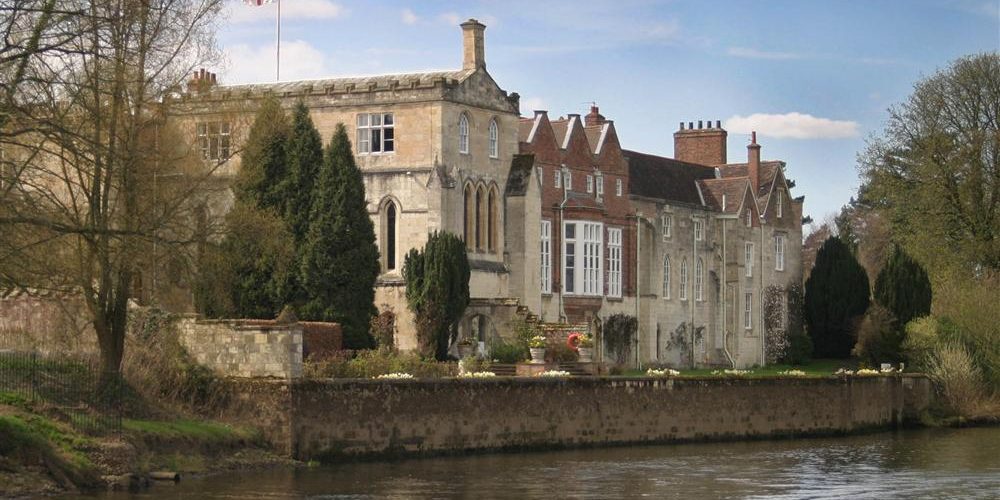
 Bishopthorpe Palace, the official residence of the Archbishop of York, was originally constructed between 1241 and 1250 by Archbishop Walter de Grey. The Archbishop bought the then village of Thorpe St Andrew (St Andrewthorpe) in 1226, demolishing the old manor house and using some of its local stone for the Palace built on the same site. Once completed the Palace was duly transferred to the ownership of the Dean and Chapter of York Minster, being known as Bishopthorpe Palace. The village became known as Bishopthorpe; in 1989 parts of the village, including the Palace were designated a conservation area.
The Palace is a Grade I listed building and has a gatehouse, stables and a brewhouse and brewster’s cottage. Set in a wooded, rural area, three miles south of York, its location on the bank of the River Ouse allows for access to a first-class transport network for the diocese.
The Palace has seen many changes. In 1365 Archbishop Thoresby extended his private rooms and in 1483 Archbishop Rotherham doubled the size of the residential quarters by adding a red brick north wing, and upgraded the kitchens. The Palace was remodelled for Archbishop Drummond, in the Gothic Revival style, by Thomas Atkinson of York between 1763 and 1769; John Carr designed the Gothic stable block and gatehouse. Between1766 and 1769 the front of Bishopthorpe Palace was built with a new entrance hall and drawing room. A further addition to the north wing was undertaken in 1835 for Archbishop Harcourt who also had rooms built above the chapel.
The incumbent Archbishop of York, since 2005, is John Sentamu. Many of the street names in Bishopthorpe village remember his many predecessors making reference to Michael Ramsey, William Maclagan and Thomas Lamplugh and others.
Bishopthorpe Palace operates as multi-functional premises, primarily being the Archbishop’s home and office, with working offices, meeting rooms, worship areas and living quarters. The Palace and its grounds are also used for charity days, retreats, receptions, village fetes, and dinners.
Bishopthorpe Palace has had its resident Archbishop since 1241, apart from the ten years during the Protectorate from 1650 up to the start of the Restoration in 1660.


I’m sure I’ve read somewhere that prior to the construction of this palace (late 13thC) that parts of the original buildings at King’s Manor were used as the Archbishops residence although most of the more modern parts of that building were not out up until the 15thC.